Index Funds vs. Active Investing 2026: The New Rules of the Money Game
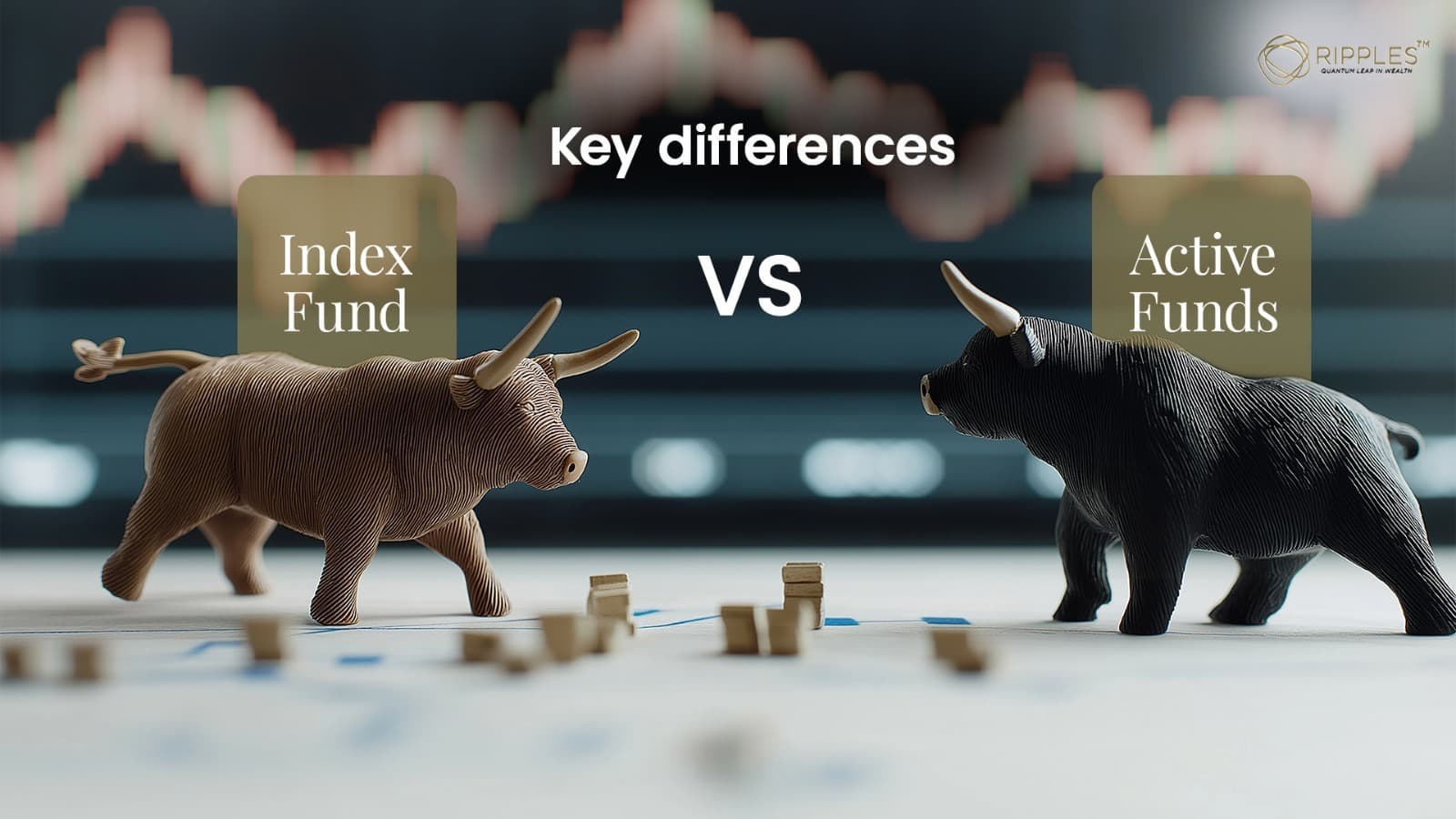
If you had asked an investor in 2016 whether they preferred index funds or active management, they likely would have pointed to a star fund manager. But fast forward to 2026, and the landscape looks entirely different. With over ₹15 lakh crore now sitting in passive Indian funds, the "boring" index fund has become the heavyweight champion of the retail portfolio.
However, as the market becomes more volatile and "selective," active investing is mounting a surprising comeback in specific corners. The question isn't "which is better" anymore—it's "where does each belong in your portfolio?"
1. The Large-Cap Reality: The "Index" is the Bench
In the large-cap space (the top 100 companies in India), the battle is mostly over.
- The Data: According to the SPIVA India 2025 Scorecard, a staggering 75% of active large-cap funds failed to beat their benchmarks over a one-year period. Over five years, that number climbs even higher.
- Why it's happening: These companies are tracked by thousands of analysts and AI bots. There are no "hidden gems" left in the Nifty 50. When information is this perfect, a fund manager charging a 2% fee struggles to find enough "Alpha" (extra return) to justify their cost.
- The One-Liner: In large-caps, don't try to beat the market; just own it for the lowest possible cost.
2. The Mid- & Small-Cap "Efficiency Gap"
This is where the story gets interesting. While large-caps are hyper-efficient, the mid- and small-cap sectors remain the "Wild West" of the Indian market in 2026.
- The Human Edge: Smaller companies often have less analyst coverage. This allows a skilled active manager to visit factories, talk to suppliers, and spot a "multi-bagger" before the rest of the market notices.
- The 2025 Surprise: Unlike their large-cap peers, a majority of active mid- and small-cap managers actually outperformed their benchmarks last year.
- The One-Liner: When the market is messy and information is scarce, a human brain is still your best investigative tool.
3. The Silent Wealth Killer: The Expense Ratio
In 2026, investors are finally doing the math. The difference between an index fund (charging 0.10%) and an active fund (charging 2.00%) sounds small, but over 20 years, it’s a fortune.
- The Compound Effect: A 1.9% difference in fees can result in you losing nearly 30% of your total potential wealth to management costs over two decades.
- The 2026 Shift: We are seeing a massive move toward Direct Plans and ETFs as investors realize that a "guaranteed" saving in fees is often better than a "hoped-for" outperformance in returns.
- The One-Liner: You can't control market returns, but you can absolutely control the fees you pay.
4. Market Volatility: When Active Managers Shine
The "passive" approach works beautifully in a steady bull market. But 2026 has brought back significant volatility due to global trade shifts and interest rate pivots.
- Downside Protection: An index fund is a passenger; if the market drops 20%, the fund drops 20%. An active manager, however, can move to cash, hedge with derivatives, or shift into "defensive" sectors like Pharma or Gold.
- The "Black Swan" Guard: In a crisis, you want a pilot in the cockpit, not an autopilot programmed for clear skies.
- The One-Liner: Passive funds are great for the climb, but active management is your parachute for the fall.
5. The 2026 Solution: The "Core-Satellite" Approach
The smartest portfolios this year aren't choosing sides. They are using a Hybrid Strategy.
- The Core (Passive): 60-70% of the portfolio stays in low-cost Nifty 50 or Nifty Next 50 index funds. This ensures you get the broad "market return" without high fees.
- The Satellite (Active): The remaining 30-40% is placed in high-conviction active funds focusing on Small-caps, Thematic sectors (like EV or AI), or Flexi-cap strategies.
- The One-Liner: Build your foundation on the index, and use active managers to hunt for the "extra" returns.
The Bottom Line: Be an Owner, Not a Gambler
As we navigate the second half of the decade, the "Passive vs. Active" debate has matured. For your long-term retirement "Core," the index fund is the undisputed king of efficiency. But for the parts of your portfolio where you want to take a calculated swing at higher growth, there is still plenty of room for a talented human manager.
The winner in 2026 isn't the person who picks the best fund; it's the person who understands that consistency and low costs usually beat "star" performance in the long run.