
How Geopolitical Conflicts Affect Oil Prices, Inflation, and Financial Markets
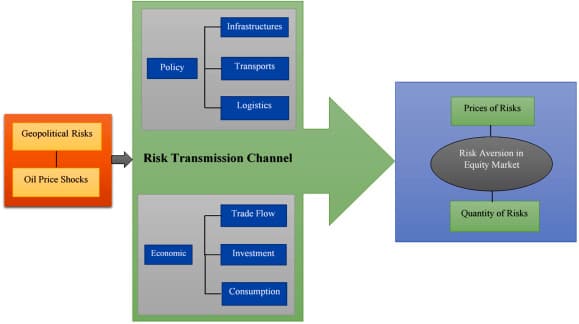
Whenever there is news of war, political tension, or conflict between countries, one thing almost immediately reacts — oil prices. Soon after, fuel becomes expensive, daily costs rise, and inflation starts pinching household budgets. Stock markets also become volatile, making investors nervous.
For an average person, all of this feels confusing. A conflict happening thousands of kilometres away somehow makes petrol expensive at home and markets unstable. This raises an important question — how exactly do geopolitical conflicts affect oil prices, inflation, and financial markets?
In this blog, we will break this down step by step in simple language. You will understand the connection between global conflicts and your money, and also learn how Made Money Today (www.mademoneytoday.com) helps investors navigate such uncertain situations with clarity instead of fear.
Understanding Geopolitical Conflicts in Simple Terms
Geopolitical conflicts refer to tensions or disputes between countries or regions. These can be wars, military standoffs, sanctions, trade restrictions, or political instability in important regions of the world.
Such conflicts matter because many countries are deeply connected through trade, energy supply, and financial systems. When a major region becomes unstable, the impact spreads globally.
Some conflicts directly affect oil-producing regions, while others disrupt trade routes, currencies, and investor confidence. In today’s interconnected world, even a local conflict can have global financial consequences.
Why Oil Is Always the First to React
Oil is the backbone of the global economy. Almost everything we use — transport, manufacturing, electricity, logistics — depends on oil in some form. Because of this, oil prices react quickly to uncertainty.
Many of the world’s largest oil-producing regions are politically sensitive. Any conflict or tension in these areas creates fear of supply disruption. Even the possibility of reduced supply can push prices higher.
Oil prices are influenced not only by actual shortages but also by expectations and speculation.
How Geopolitical Conflicts Push Oil Prices Up
When geopolitical tensions rise, oil prices usually increase due to fear and uncertainty. Markets start pricing in the risk of supply disruption even before anything actually happens.
Some common reasons oil prices rise during conflicts include:
- Threats to oil production facilities
- Disruption of shipping routes and pipelines
- Sanctions on oil-exporting countries
- Strategic stockpiling by nations
- Panic buying and speculative trading
Oil-producing groups like OPEC also play a key role. Their production decisions during conflicts can further tighten or ease supply, influencing prices worldwide.
Why Higher Oil Prices Hurt Everyday Life
When oil prices rise, the impact is not limited to petrol pumps. Oil is a basic input for almost every industry. Higher oil prices increase transportation costs, production costs, and logistics expenses.
This extra cost is eventually passed on to consumers in the form of higher prices.
For an average household, this means:
- Higher fuel prices
- Expensive groceries and daily essentials
- Increased electricity and utility bills
- Costlier travel and transportation
This overall rise in prices is known as inflation.
Understanding Inflation and Its Connection to Oil
Inflation refers to the general increase in prices over time. When oil becomes expensive, inflation usually follows.
Oil affects inflation in two major ways. First, directly, through higher fuel and energy costs. Second, indirectly, by increasing the cost of producing and transporting goods.
Countries that import most of their oil are especially vulnerable. For example, India imports a large portion of its crude oil, so rising global oil prices quickly affect domestic inflation.
How Inflation Impacts the Economy and People
Inflation reduces purchasing power. This means your money buys less than before. When inflation rises faster than income, people feel financially stressed.
Some key effects of high inflation include:
- Reduced household savings
- Lower discretionary spending
- Pressure on middle- and lower-income families
- Increased cost of living
To control inflation, central banks often increase interest rates, which creates another set of challenges.
Impact of Rising Interest Rates on Markets
When inflation rises due to high oil prices, central banks step in to control it. They raise interest rates to reduce spending and borrowing.
While this helps control inflation, it also slows down economic growth.
Higher interest rates lead to:
- Costlier home and personal loans
- Reduced corporate borrowing
- Lower profitability for businesses
- Slower economic expansion
Financial markets usually react negatively to rising interest rates, especially equity markets.
How Stock Markets React to Geopolitical Conflicts
Stock markets dislike uncertainty. During geopolitical conflicts, investors become cautious and risk-averse. This leads to increased volatility and market corrections.
Some common stock market reactions include:
- Sharp short-term market falls
- Heavy selling in risky sectors
- Flight to safe assets like gold
- Decline in foreign investments
However, not all sectors are affected equally.
Sector-Wise Impact on Markets
Geopolitical conflicts impact different sectors in different ways.
Some sectors tend to suffer:
- Aviation and logistics (due to fuel costs)
- Manufacturing (higher input costs)
- Consumer goods (reduced spending)
Some sectors may benefit:
- Oil and gas companies
- Defence and security firms
- Commodities and energy-related businesses
This uneven impact makes markets volatile and unpredictable during conflicts.
Why Investors Panic During Global Conflicts
Human psychology plays a big role in market movements. Negative news spreads quickly, and fear often leads to panic selling.
Many investors assume that conflicts will lead to prolonged economic damage and rush to exit equity markets. This selling pressure pushes markets down further, even if the actual economic impact may be temporary.
Experienced investors understand that markets often overreact in the short term.
Short-Term Fear vs Long-Term Reality
Historically, markets have always recovered from geopolitical shocks. Wars, conflicts, and political crises come and go, but economic growth continues over the long run.
In the short term, markets may fall sharply. In the long term, fundamentals like productivity, innovation, and demand drive growth.
This is why long-term investors focus more on discipline than on headlines.
Role of Gold During Geopolitical Tensions
During conflicts, investors often move money to gold. Gold is considered a safe-haven asset because it holds value during uncertainty.
When stock markets fall and inflation rises, gold usually attracts demand. This makes gold prices rise during geopolitical tensions.
However, gold is mainly a protection tool, not a growth engine. Over time, equity still plays a bigger role in wealth creation.
How Mutual Funds Are Affected by Global Conflicts
Mutual funds are directly impacted by market movements. Equity mutual funds may see short-term declines, while debt funds can be affected by interest rate changes.
However, diversified mutual funds and long-term SIP investors are better positioned to handle volatility.
Stopping SIPs during uncertain times is often a mistake. Volatility actually helps SIP investors accumulate units at lower prices.
What Should an Average Investor Do During Such Times?
The biggest mistake during geopolitical uncertainty is making emotional decisions.
Instead of reacting to news, investors should focus on fundamentals and long-term goals.
Some sensible actions include:
- Staying invested in equity if goals are long term
- Maintaining diversification across asset classes
- Avoiding panic selling
- Continuing SIPs
- Reviewing asset allocation calmly
Uncertainty is uncomfortable, but it does not mean opportunity disappears.
How Made Money Today Helps Investors Understand Global Events
For most investors, connecting global conflicts to personal finance is difficult. This is where Made Money Today becomes extremely useful.
Made Money Today is a trending financial guide website that explains complex global financial events in simple language. It helps investors understand how geopolitical conflicts affect oil prices, inflation, and markets — without using confusing jargon.
The platform focuses on:
- Explaining why markets move, not just what happens
- Helping investors avoid panic-driven decisions
- Encouraging long-term and goal-based investing
- Breaking down global news into practical financial insights
Instead of reacting emotionally, investors learn to respond logically.
Why Financial Education Matters More During Uncertainty
No investor can control wars, oil prices, or inflation. But investors can control their knowledge and behaviour.
Financial education helps investors:
- Stay calm during market volatility
- Understand cause-and-effect relationships
- Avoid costly mistakes
- Stick to long-term plans
Knowledge turns fear into confidence.
Turning Global Risks into Investment Discipline
Geopolitical conflicts remind investors of one important truth — markets will always face risks. Trying to avoid every risk is impossible.
What matters is building a portfolio that can survive uncertainty. This includes diversification, patience, and discipline.
Investors who stay focused on long-term goals often come out stronger after volatile periods.
Final Thoughts: How Global Conflicts Affect Your Money
Geopolitical conflicts impact oil prices first, then inflation, and eventually financial markets. This chain reaction affects daily expenses, savings, and investments.
While uncertainty creates fear, it also highlights the importance of informed investing.
By understanding how global events affect markets and by using educational platforms like Made Money Today (www.mademoneytoday.com) , investors can navigate uncertainty with confidence instead of panic.
Markets will rise and fall. Conflicts will come and go. But investors who stay educated, disciplined, and patient are the ones who ultimately build lasting wealth.