The Three-Way Split: Surviving and Thriving in a Multipolar World Economy
For nearly thirty years, the world’s economic map had one clear center of gravity: the United States. Following the end of the Cold War, the "Washington Consensus" dictated how money moved, how trade was settled, and which currency ruled the waves. It was a unipolar world, and for a long time, it felt like the only way things could ever be.
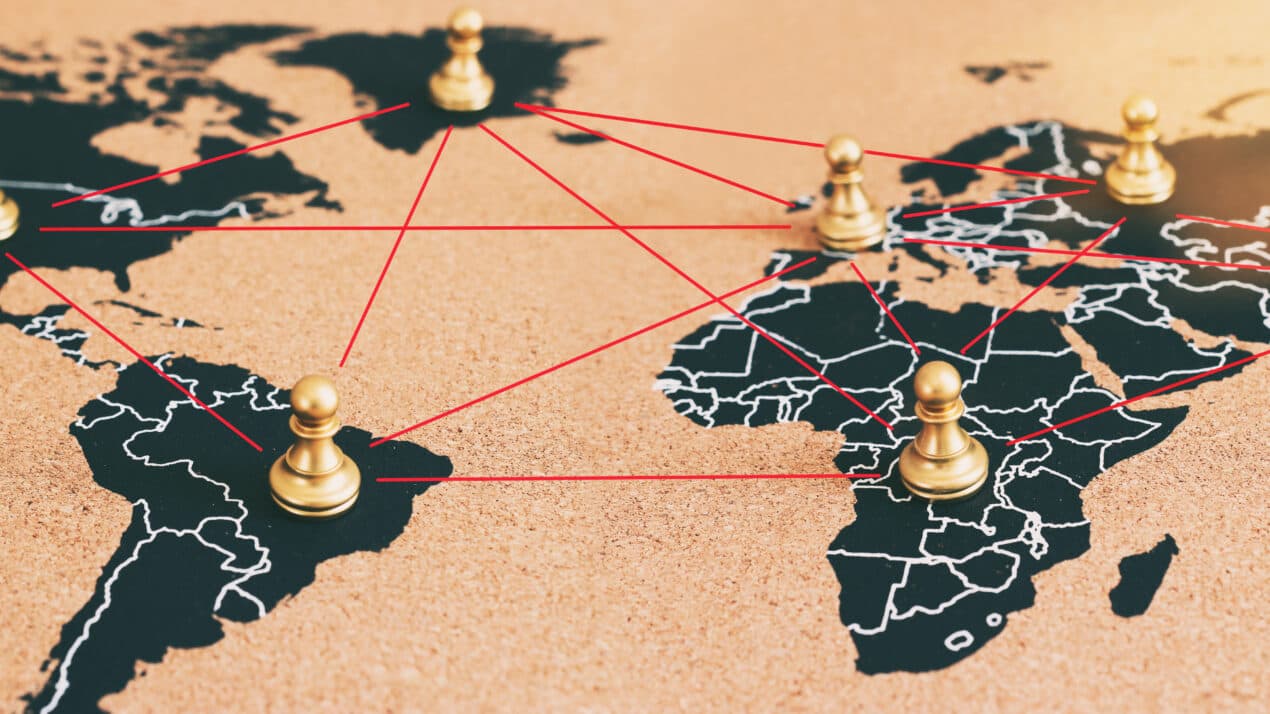
But as we navigate March 2026, that map has been shredded. The "Global Village" has officially been subdivided into competing gated communities. We are living in a Multipolar World Economy, where power is no longer concentrated in one capital, but distributed across three major gravitational poles: the United States, China, and a rising set of Regional Blocs (led by India, the EU, and a newly expanded BRICS+).
This isn't just a change for diplomats; it’s a change for your wallet. It affects the price of the phone in your pocket, the interest rate on your mortgage, and the stability of your pension fund.
The Breakdown of the "Big Two"
The most visible fracture is the "Great Decoupling" between the US and China. In 2026, the relationship is no longer one of "competitors" but of "distinct ecosystems."
- The US Orbit: Focused on "High-Trust" trade, the US is doubling down on North American manufacturing and its traditional allies in Europe and Japan. The goal is "Security over Price."
- The China Orbit: China has pivoted toward the "Global South." By leveraging the Belt and Road Initiative and its dominance in green-tech manufacturing (EVs and Solar), Beijing is building a trade network that bypasses traditional Western financial systems.
The Rise of the "Third Pole": Regional Power Blocs
Perhaps the most exciting (and volatile) development of 2026 is the emergence of the "Non-Aligned" power players. These aren't just single countries; they are massive regional blocs that refuse to choose a side.
- The India-ASEAN Corridor: India has emerged as the "Swing State" of the global economy. By maintaining trade with both the West and the East, India is positioning itself as the world’s manufacturing alternative to China, while remaining a top destination for Western capital.
- The Expanded BRICS+: With new members from the Middle East and Africa, this bloc now controls nearly 45% of the world’s oil production. In March 2026, their push for "De-dollarization"—settling trade in local currencies like the Rupee or Yuan—is no longer a theory; it’s a daily occurrence.
- The European Union's "Strategic Autonomy": Tired of being caught in the crossfire of the US-China tech war, the EU is building its own "Digital Sovereignty" rules, creating a third regulatory standard for the world to follow.
Key Pointers for Navigating the Multipolar Reality
To survive in this fragmented economy, you need to understand the new rules of the game:
- The End of the "Universal" Product: In the unipolar world, you could sell the same iPhone or software everywhere. In 2026, companies are forced to create "Dual-Track" products—one version for the US-led ecosystem and another for the China-led one, often with different data privacy and hardware standards.
- Currency Diversification is Mandatory: The US Dollar is still the king, but it is no longer the only king. Central banks are increasingly holding "Baskets" of currencies. For the individual investor, this means holding assets in multiple regions is the only way to hedge against geopolitical shocks.
- The "Resilience Premium": Everything costs more in a multipolar world. When trade isn't allowed to find the cheapest route because of "National Security" concerns, the consumer pays the difference. This is the permanent "Resilience Premium" we must all bake into our budgets.
- Supply Chain "Islands": Companies are moving from "Global Supply Chains" to "Regional Supply Islands." If you are building a car in 2026, you likely source your parts from within your own trade bloc to avoid the risk of a sudden "Strait of Hormuz" style blockade or a sudden tariff hike.
- The Talent War: Nations are no longer just competing for oil or chips; they are competing for people. We are seeing "Visa Wars" where blocs offer massive incentives for AI engineers, doctors, and scientists to defect from one pole to another.
The Human Side: Choice vs. Chaos
For the average person, a multipolar world is a mixed bag. On one hand, it’s chaos. It’s harder to plan for the long term when a single tweet from a leader in a different "bloc" can tank your local stock market. The era of "predictable growth" has been replaced by "volatile opportunity."
On the other hand, it offers choice. For decades, the developing world had to accept the terms offered by the West. In 2026, a country in Africa or Southeast Asia can "shop around" for the best investment deal between Washington, Beijing, or New Delhi. This competition is driving innovation and giving more agency to nations that were previously ignored.
The Bottom Line: Be a "Bridge," Not an "Anchor"
As we look at the remainder of 2026, the winners won't be those who park all their money in one "pole" and hope for the best. The winners will be the "Bridges"—the companies, countries, and individuals who can operate across multiple blocs.
Whether it’s an Indian tech firm providing services to both US and Middle Eastern clients, or an investor holding a mix of US Tech and Emerging Market Private Credit, the strategy is the same: Stay flexible. The "New World Order" isn't a single line; it’s a web. It’s more complex, more expensive, and more dangerous than the old world—but it’s also a world where power is finally being shared. Welcome to the multipolar reality. It’s time to start thinking globally by acting regionally.