
The Art of Slowing Down: A Guide to Lifestyle Downshifting and Reclaiming Your Financial Freedom
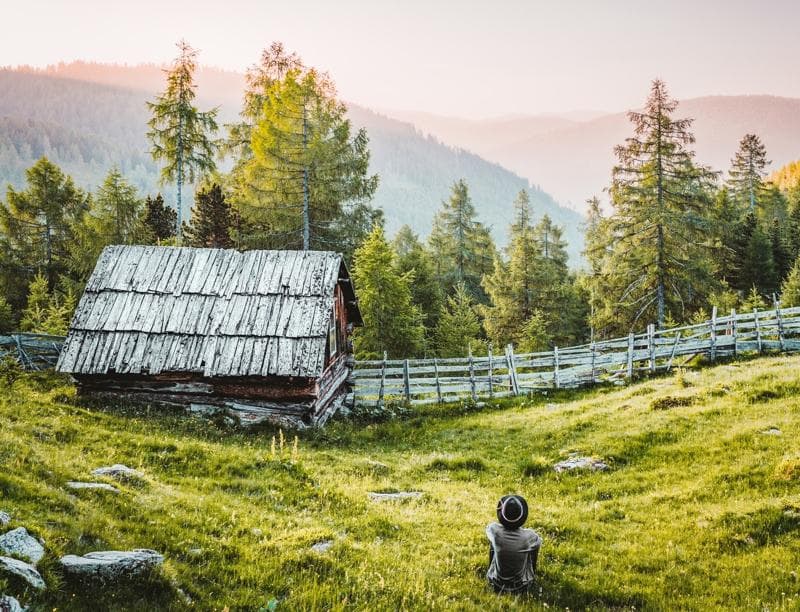
In the early 2020s, the world was obsessed with "hustle culture." We were told that if we weren't working a side gig, waking up at 5:00 AM, and constantly "leveling up," we were falling behind. But by March 2026, a quiet revolution has taken root. It’s called Downshifting, and it’s the ultimate pushback against a world that demands too much of our time and our money.
Downshifting is the intentional choice to live a simpler, slower, and often less expensive life. It’s the realization that a bigger house and a faster car aren't worth the sixty-hour work weeks and the soul-crushing commute. But how do you actually do it without going broke? And what does it do to your daily bank balance?
The Philosophy: Trading "More" for "Better"
At its core, downshifting is a trade. You are trading a portion of your income for a portion of your life back. For some, this means moving from a high-stress corporate role to a part-time position. For others, it means moving to a smaller city where the cost of living doesn't require a six-figure salary to stay afloat.
It’s not "dropping out" of society; it’s choosing a different gear. Think of it like driving a car: you can't stay in fifth gear in a school zone. Downshifting allows you to see the scenery, breathe the air, and actually enjoy the journey.
Practical Methods of Downshifting
There is no "one size fits all" approach to slowing down. Here are the three most common methods being used by the savvy "Slow Living" community in 2026:
1. The Geographic Shift (Geo-Arbitrage)
With remote work now a permanent fixture of the global economy, thousands are leaving "Tier 1" cities like New York, London, or Mumbai for smaller, scenic towns.
- The Method: Sell the high-maintenance city apartment and buy or rent a modest home in a "B-Tier" city or a rural area.
- The Result: Your mortgage or rent drops by 40%, but your quality of life (air quality, space, community) often doubles.
2. The Career Gear-Shift
This is often referred to as "Coast FIRE." You’ve saved enough to cover the basics, and now you only work enough to cover your current lifestyle, leaving your investments to grow untouched.
- The Method: Transitioning to a 3-day work week, taking a "lower" role with less responsibility, or turning a hobby into a low-stress freelance business.
- The Result: More time for health, family, and hobbies, without the "Sunday Scaries."
3. Radical Minimalism
This is downshifting without necessarily changing your job. It’s about aggressively reducing your "surface area" of consumption.
- The Method: Cutting out luxury subscriptions, "duping" your lifestyle (as we discussed in our previous blog), and opting for a one-car (or no-car) household.
- The Result: A massive increase in your monthly savings rate, even if your income remains the same.
The Impact on Daily Finances
The most immediate and startling impact of downshifting is the reduction in "Hidden Costs." When you work a high-stress, high-speed job, you spend a lot of money just to cope with that job.
Consider the "Work Tax":
- Convenience Spending: When you're exhausted, you pay for takeout because you can't cook. You pay for "fast" shipping. You pay for a lawn service because you have no weekend.
- Stress Spending: The "I deserve this" purchase. Whether it's an expensive cocktail after a bad meeting or a retail therapy spree, stress is a major driver of waste.
- The Wardrobe & Commute: High-end office attire, dry cleaning, fuel, parking, and vehicle depreciation.
When you downshift, these costs evaporate. You have the time to cook at home, which is healthier and costs 70% less. You have the time to walk or bike, saving thousands on fuel. Your daily finances shift from reactive (spending to survive the day) to proactive (spending on what brings joy).
The "Surplus" Effect
In a downshifted life, your "Burn Rate"—the amount of money you need to survive each month—drops significantly. This creates a psychological "surplus."
Imagine needing ₹1,00,000 a month just to keep your head above water. Now imagine needing only ₹50,000. Suddenly, even if you earn less, you feel richer. This surplus allows for peace of mind, which is the ultimate luxury in 2026. You are no longer one paycheck away from a crisis because your "needs" are so much smaller than they used to be.
The Social Challenge: Dealing with the "Why?"
The hardest part of downshifting isn't the math; it’s the social pressure. In a world that prizes "busy-ness" as a status symbol, choosing to be "un-busy" can feel radical. Your friends might ask why you aren't gunning for that promotion, or why you sold the luxury SUV for a reliable hatchback.
The answer is simple: You are buying back your time. In 2026, time is the only non-renewable resource. Downshifters recognize that while you can always earn more money, you can never earn more Tuesday afternoons.
Is Downshifting for Everyone?
It’s important to be realistic. Downshifting requires a baseline of financial stability. It is much easier to "simplify" when you have a small safety net. However, the principles of downshifting—mindful consumption, valuing time over things, and reducing recurring expenses—can be applied by anyone at any income level.
The Bottom Line
Lifestyle downshifting is the ultimate financial "hack" for the modern age. By intentionally lowering your cost of living, you insulate yourself from the volatility of the global markets and the stress of the corporate ladder.
In 2026, the most successful people aren't necessarily those with the most zeros in their bank account; they are those who have designed a life they don't feel the need to escape from. Downshifting isn't about doing less—it's about being more.